Spine Deformity Treatment in Miraj
Expert evaluation and treatment for scoliosis, kyphosis, and spinal imbalance by Dr. Anish William Isapure, an FRCS-qualified spine surgeon in Miraj with 7 years of experience in complex spine care.
Dr. Anish is a proud Member of the internationally renowned Scoliosis Research Society
Founded in 1966, the Scoliosis Research Society (SRS) is the world's foremost organisation dedicated to the research, education and treatment of spinal deformities. Membership is granted only to surgeons with demonstrated expertise and ethical commitment in complex deformity care --- placing Dr. Anish among a globally recognised community of scoliosis specialists.
1000+
Spine Procedures
7+
Years Experience
FRCS
Qualified Surgeon
3D
Alignment Assessment
What is Spine Deformity?
Spine deformity refers to an abnormal shape or alignment of the spine. The most common patterns are scoliosis, where the spine curves sideways; kyphosis, where the upper back bends too far forward; and sagittal imbalance, where the body gradually shifts ahead of the pelvis. Some deformities begin in childhood and continue into adult life, while others develop later because of disc degeneration, arthritis, fractures, or failed previous surgery.
Not every spinal curve is dangerous, but when the deformity starts changing posture, causing pain, tiring the body, or compressing nerves, it needs careful specialist evaluation. Many patients in Miraj first notice uneven shoulders, a rib hump, forward stooping, or difficulty walking long distances. Others present with back pain, leg symptoms, or breathlessness in more advanced cases.
Dr. Anish William Isapure offers a full spectrum of care for spine deformity, from observation and rehabilitation to complex correction planning. His approach focuses on understanding the exact curve pattern, the patient's age and function, nerve involvement, and long-term goals before recommending bracing, pain-focused treatment, decompression, or corrective realignment surgery.
Signs You May Have a Spinal Alignment Problem
Early recognition helps prevent progression and makes treatment planning more precise
Visible spinal curve or leaning posture
Persistent back pain with prolonged standing or walking
Uneven shoulders, rib hump, or waist asymmetry
Loss of balance or forward stooping while walking
Reduced stamina because the body tires compensating for imbalance
Difficulty sleeping flat because of deformity-related discomfort
Leg pain, numbness, or weakness from nerve compression
Breathing difficulty or severe functional limitation in advanced curves
What Causes Spine Deformity?
Understanding the type of curve and the reason it progressed is key to choosing the right treatment
Structural Causes
- Adolescent idiopathic scoliosis that progressed into adulthood
- Age-related degenerative scoliosis with disc collapse and facet arthritis
- Kyphosis causing excessive forward bending or a hunched posture
- Post-traumatic or post-surgical spinal imbalance
Progression Factors
- Osteoporosis and vertebral collapse worsening alignment
- Untreated disc degeneration leading to gradual curve progression
- Weak core muscles and deconditioning increasing functional imbalance
- Delayed specialist review after early postural changes were noticed
Dr. Anish's Deformity Care Approach
Every treatment plan is built around alignment, nerve safety, pain relief, and long-term function
Detailed Deformity Evaluation
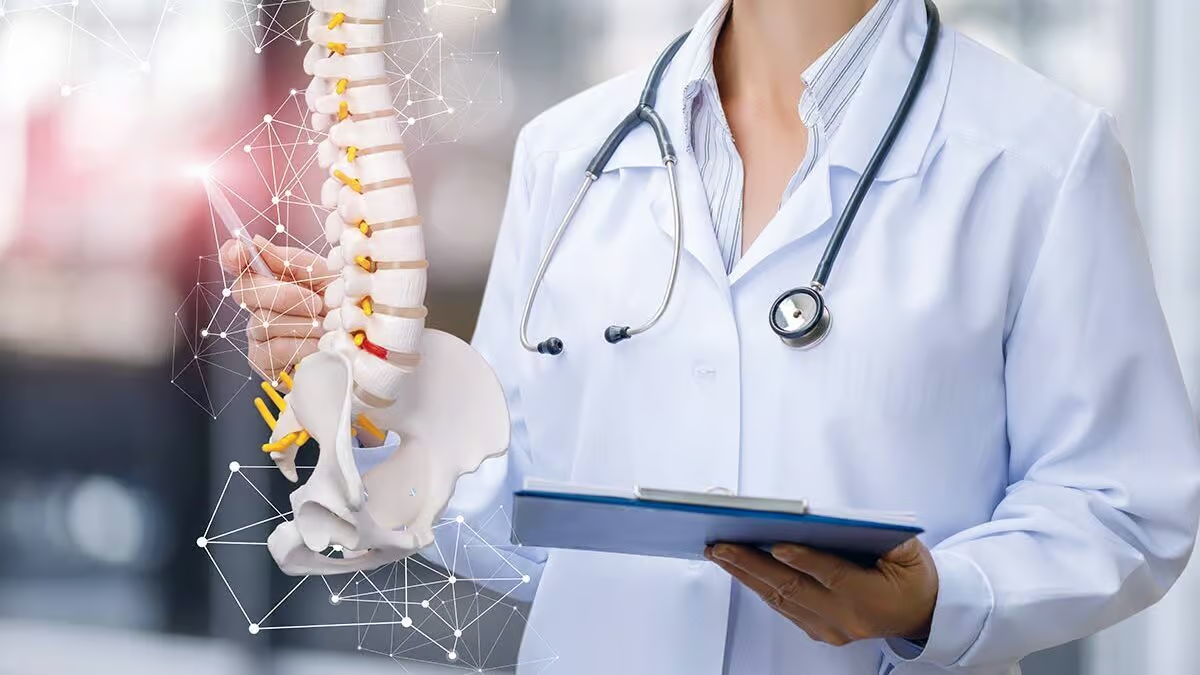
Comprehensive assessment with standing full-spine X-rays, MRI, neurological evaluation, and posture analysis to understand the full curve pattern.
Curve Progression Planning
Measurement of scoliosis, kyphosis, sagittal balance, and pelvic parameters to decide whether observation, rehabilitation, or surgery is appropriate.
Bracing & Rehabilitation
Selected patients benefit from posture-specific physiotherapy, core strengthening, pain control, and bracing when stability and curve control are possible.
Nerve & Pain Relief Procedures
Targeted injections or decompression may be used when the deformity also causes nerve compression, leg pain, or difficulty walking.
Corrective Deformity Surgery
Advanced realignment and fusion techniques are planned carefully to restore balance, reduce pain, and protect nerves in severe or progressive deformities.
Long-Term Follow-Up
Recovery is supported with rehabilitation, posture retraining, serial imaging, and activity guidance to maintain alignment and function.
Whether the goal is to monitor a stable curve, improve posture and pain with rehabilitation, or restore balance through corrective surgery, Dr. Anish focuses on the least invasive path that safely improves quality of life.
Why Choose Dr. Anish for Spine Deformity?
Specialist planning matters in deformity care because posture, balance, pain, and nerves all need to be considered together
FRCS (England & Edinburgh)
Internationally recognised spine training for complex alignment, fusion, and deformity correction surgery.
1000+ Spine Procedures
Extensive operative experience across degenerative, deformity, and stabilisation surgery.
7 Years Experience
Longstanding focus on personalised treatment planning for both younger and older deformity patients.
Complex Spine Care in Miraj
Trusted for specialist evaluation when posture change, imbalance, pain, and nerve symptoms overlap.
Treatment Journey & Recovery
Recovery depends on the severity of deformity and the treatment chosen, but the pathway is always carefully staged
Assessment & Optimisation
The first stage focuses on accurate diagnosis, curve measurement, bone health assessment, and deciding whether conservative care or surgery is the right path.
Early Recovery (Week 1-6)
After intervention, the goal is pain control, safe mobilisation, breathing exercises, wound care, and gradual return to upright walking with guided rehabilitation.
Realignment & Rehabilitation (Month 2-12)
Strength, posture, endurance, and balance steadily improve over the next several months. More complex correction surgeries need longer follow-up to monitor healing and alignment.
Expected Outcome: The goal is a straighter, more balanced, less painful spine with better endurance, safer nerve function, and improved confidence in day-to-day movement.
Frequently Asked Questions
Straight answers about scoliosis, kyphosis, and spine deformity treatment in Miraj
Related Spine Conditions
Explore other spine conditions and procedures Dr. Anish treats
Spinal Fusion
Fusion techniques are often part of corrective surgery for unstable or progressive deformity.
Chronic Back Pain
Many adult deformity patients first seek help because of persistent back pain and fatigue.
Minimally Invasive Surgery
Selected deformity cases may benefit from less invasive stabilisation and decompression strategies.
Ready to Understand and Correct Your Spine Alignment?
Book a consultation with Dr. Anish William Isapure for a detailed deformity assessment and a treatment plan tailored to your posture, pain, and long-term goals.